
The email deliverability, You can send out all the invitations you want, but if they end up in the garbage can unread, you'll be left alone with your chips. And in email marketing, that's exactly what happens to 16% legitimate emails that never reach their recipients' inboxes.
Spoiler: it's usually not your sending platform that makes the difference, but your practices and the respect you have for your recipients.
This article is freely available.
It took time and expertise!
This month, thanks to our customer-sponsors: Actito, BPI France, Cardif, Citeo, Clarins, CMI France, Editis, Engie, France Télévisions, Le Parisien, Les Echos, Les Furets, Pierre Fabre, UMR, Voyageurs du monde... Thanks to the missions they entrust to us, we can write and share free content. They support our educational work to promote more responsible email. Become a customer and benefit from our expertise while supporting the production of open knowledge.
Introduction to deliverability in video format
If you'd rather watch a video than read a long article, this introduction to email deliverability in video format is for you. In just 28 minutes, we cover all the content of this article: why spam filters exist, what spam really is (legally and in reality), how these filters work, and why your displayed deliverability rate can be misleading.
Why do spam filters exist?
Because there are spammers! 45% of the total volume of emails sent worldwide is spam. Yes, you read that right. Almost every other email. Without spammers, there would be no filters.
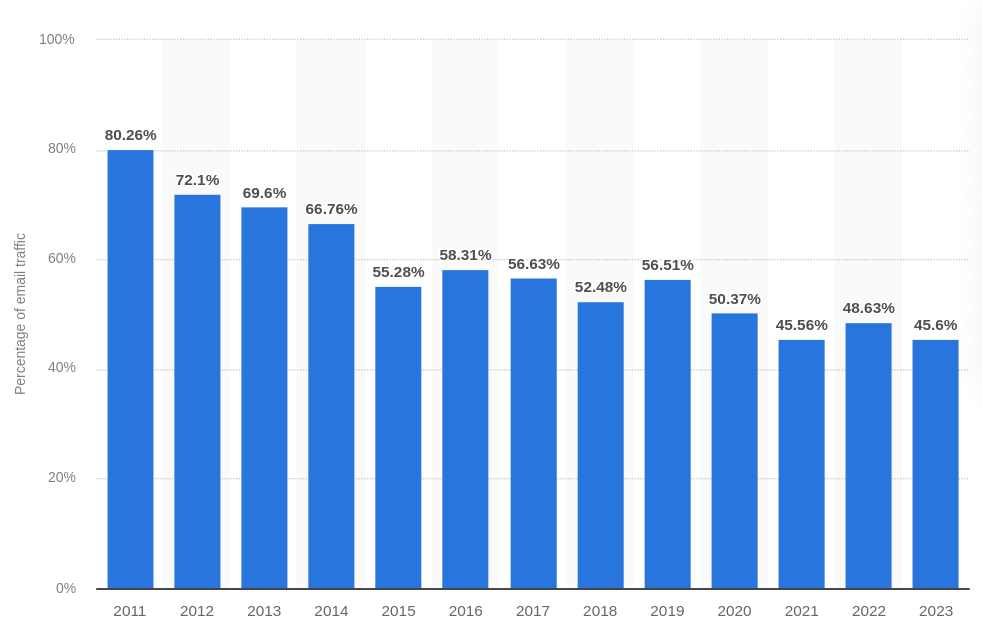
Global spam volume as a percentage of total email traffic from 2011 to 2023 - Source: Statista
The good news? Most spam never reaches your inbox, not even your spam folder. Spam filters do a colossal job of protecting you. But this relentless fight against spam has collateral damage: honest marketers who play by the rules sometimes find themselves caught in the net.
The Graymail concept: when irritation becomes a criterion
Messengers like Microsoft and spam filters like Vade have invented the concept of the Graymail (literally «gray mail»). These are all commercial e-mails which are not really spam in the legal sense, but which are not always wanted by recipients.
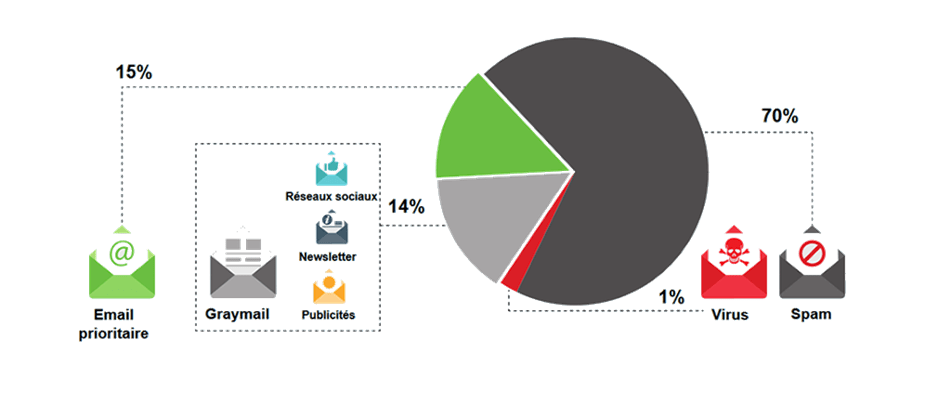
The purpose of anti-spam filters is twofold:
- Protecting yourself criminal e-mails (phishing, extortion, scams)
- Eliminate irritants to offer an optimal user experience (e.g. when your promotional emails or newsletters seem unwanted)
And that's where it gets tricky for you.
What is spam, really?
There are two approaches to defining spam, and understanding this distinction is fundamental to your deliverability.
The legal definition (the one that counts... a little)
Under French (and European) law, spam is a message sent without the recipient's consent. This is the famous opt-in that you must obtain.
But here's the problem: in deliverability, legal consent is not enough.
The definition that really counts: the recipient's perception
Spam filters analyze their users' feedback to detect and filter out irritating e-mails.
An email can be perfectly legal and still end up as spam if your recipients :
- Don't remember registering
- Find your content irrelevant
- Are irritated by your mailing frequency
- Can't quickly find out how to unsubscribe
Perceived legitimacy always trumps legal legitimacy.
The impact on «honest marketers»
You comply with the RGPD, you have double opt-in, you send quality content... and yet, 12% of your legitimate emails are not delivered to your inbox. This is what Validity in its annual deliverability study.
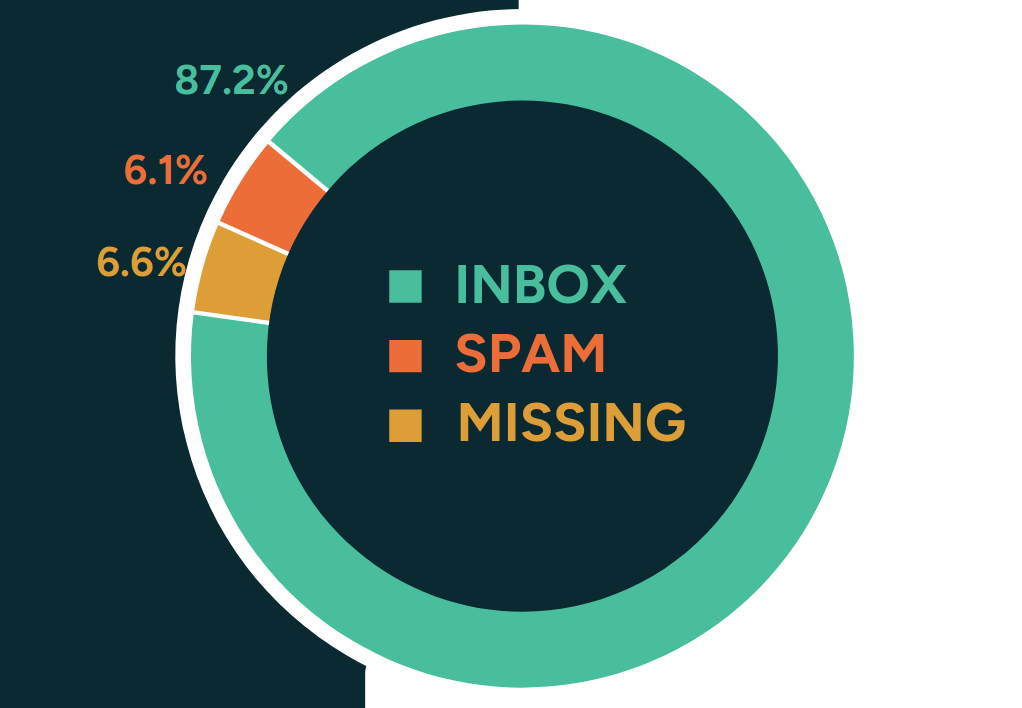
Legitimate email delivery statistics - Source : Validity
Why? Because of the fact that legitimacy is not so easy to detect and prove. That's why marketers need to deliverability training or to be accompanied by deliverability experts.
How do anti-spam filters work?
An anti-spam filter is a a multitude of very different tests to which your emails are subjected before they reach your inbox.
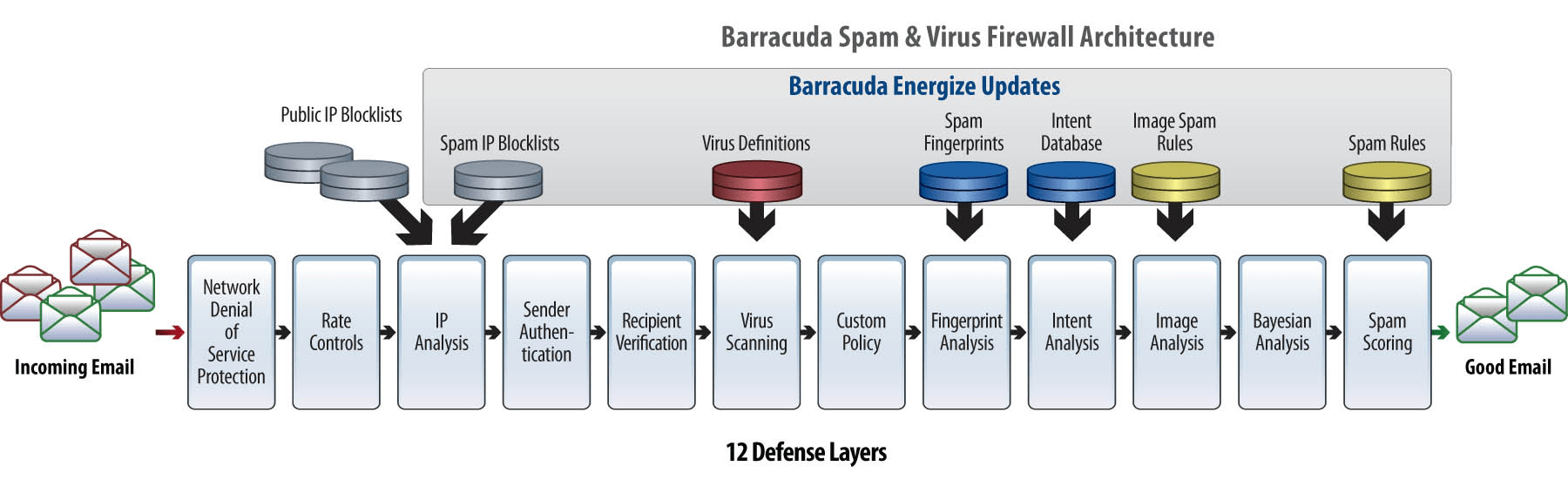
Example of an anti-spam filter with Barracuda
These filters analyze :
Your reputation as a sender
Couriers assign you a reputation score deliverability based on :
- Recipient engagement (opens, clicks, replies, forwards)
- Spam complaints («report as spam», «block sender»)
- Bounce rates (invalid addresses)
- Targeting spamtraps (trap addresses)
This reputation applies to :
- Your IP addresses shipping
- Your domains senders (FROM domain and MAILFROM domain)
A bad reputation can drastically reduce your deliverability.
Your technical authentication
Messengers check that you are who you say you are in three ways email authentication protocols essential :
- SPF (Sender Policy Framework) lists the servers authorized to send emails for your domain
- DKIM (DomainKeys Identified Mail) cryptographically sign your e-mails to ensure that they have not been altered
- DMARC (Domain-based Message Authentication, Reporting and Conformance) Tells messaging services how to handle emails that fail SPF and DKIM checks, and enables you to receive compliance reports to monitor your authentication.
Without these correctly configured protocols, your e-mails risk being automatically rejected or spammed.
And many other signals
To find out more, don't hesitate to read our deliverability guide.
What is email deliverability?
Here's a definition that captures the two essential dimensions:
Deliverability is the complex art of delivering an email to a valid inbox address.
This definition contains two fundamental concepts:
- Deliver an email to a valid address ? The part technique (servers, authentication, infrastructure)
- Deliver to inbox ? The part marketing (reputation, commitment, relevance)
What deliverability is NOT
Contrary to what some people will tell you:
- It's not not your delivery platform, which ensures good deliverability (even if it can make your life easier or more complicated)
- These are not not magical tips and tricks that will help you
Deliverability is about your practices and the respect you have for the recipients of your messages.
The deliverability rate: a misleading indicator
You certainly see it in your mailing statistics: the famous «deliverability rate». Unfortunately, it's often misunderstood. What you need to remember is:
Deliverability rate = 100% - bounce rate
For example, if you send 10,000 emails and 200 bounce, your deliverability rate will be 98%.
Why this rate is misleading
This rate should be treated with caution. It simply tells you that your emails have been accepted by mail servers. It tells you absolutely nothing where they've landed:
- Inbox ?
- Spam folder?
- Gmail Promotions tab ?
- Automatically deleted without generating a bounce?
Your sending platform has no way of knowing whether your e-mails arrive in your inbox or as junk mail. Mail servers accept the email (hence the 98% deliverability rate), but then place it in the spam folder, or even delete it, without informing your platform.
It's like sending a letter by post: the letter carrier confirms that it's been delivered to the letterbox, but he can't tell you whether the recipient has read it or thrown it in the garbage can.
Conclusion
Email deliverability isn't an exact science, but it's an important one. balance between technology and marketing. Spam filters are becoming increasingly sophisticated and serve two main purposes: protect the user safety, and to guarantee the best possible best possible experience.
Your best strategy? Do as the filters do: put the user at the center of your email approach. Send less, but better. Be relevant, be expected, be respectful.
Deliverability isn't a battle against spam filters. alliance with your recipients.

Leave a Reply